The Concentric Angsts of a Bankrupt Bengali Man
The lower middle-class Bengali man does not have problems. He has arrangements.
Problems come one by one, like polite guests. Arrangements come in bundles. Rent, teeth, medicine, electricity, mother, work, shame, sleep, the price of fish, the neighbor’s drilling machine, the laptop that looks at you like a disappointed schoolteacher, and the old question sitting in the corner with its legs crossed: what exactly happened to your life?
You think money is the first problem.
It is not.
Money is the mosquito net. You notice it only when it has holes.
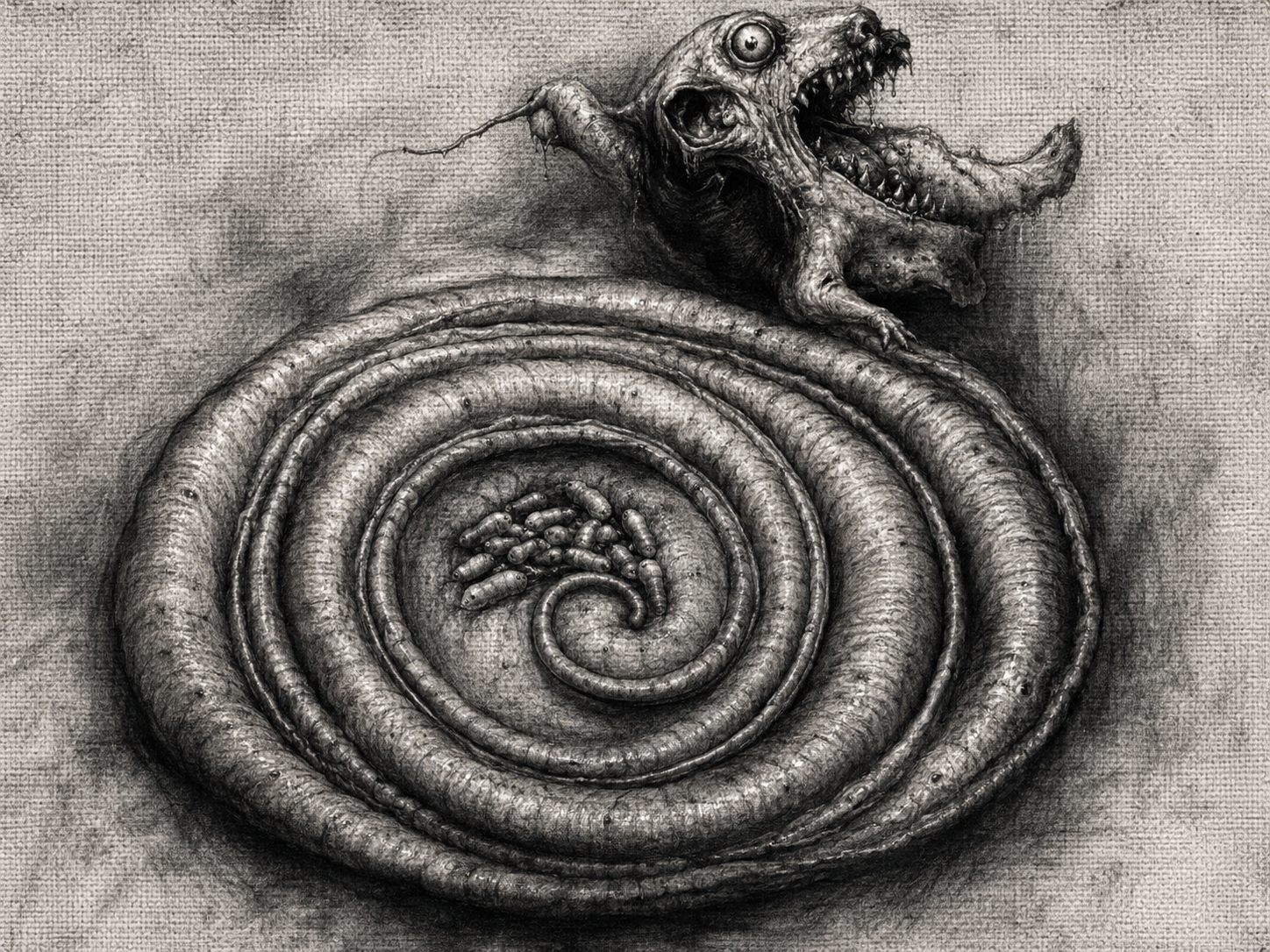
The real problem is the concentricity of the thing. One anxiety sits inside another, like those steel tiffin carriers from childhood. Open the first dabba: money. Open the second: age. Third: illness. Fourth: loneliness. Fifth: Bengali respectability. Sixth: the great ancestral museum of comparison, where every cousin has become something, bought something, married something, produced something, or at least learned to speak nonsense with confidence.
And you?
You are 51, sitting somewhere on the southern fringe of Calcutta, in a room where the fan makes a small legal objection every four seconds.
This is not the heroic poverty of cinema. Nobody is running through rain with a violin. Nobody is dying nobly under a bridge while the soundtrack weeps. This is the less photogenic kind. Lower middle-class worry has a plastic bucket, a half-charged phone, a medicine strip cut unevenly with scissors, and a calendar from an insurance company nobody remembers inviting into the house.
It is not starvation.
It is calculation.
That is worse in its own small, insulting way. Starvation is a headline. Calculation is private. Calculation is deciding whether to fix the tooth now or wait until the tooth begins filing legal documents inside your jaw. Calculation is buying medicine and then looking at tomatoes suspiciously, as if they have joined a foreign conspiracy. Calculation is knowing exactly how long one cylinder, one packet of tea, one small consulting payment, and one remaining thread of self-respect may last.
Then comes age.
Middle age in Bengal is not a season. It is a notice pasted on your chest by a municipality with spelling errors.
At 51, a Bengali man is supposed to have become “settled.” What a word. Settled. Like dust. Like a court case. Like sediment at the bottom of old tea.
Nobody defines settled, because that would ruin the magic trick. But everybody knows the checklist. Flat. Wife. Child. School fees. Mutual fund. Blood pressure machine. A respectable paunch. A car if possible. At least a scooter. At least the ability to say “I am very busy” while looking mildly bored, which is the official facial expression of success in our civilization.
If you have none of these, people do not attack you directly.
That would be crude.
They perform concern.
Concern is the Bengali sniper rifle. “Ki korchho ekhon?” What are you doing now? Such a small question. Four words. Harmless as a biscuit. But inside it lives a police station, a bank audit, a marriage bureau, and a funeral committee.
What are you doing now?
Trying not to collapse before lunch, thank you.
Trying to reply to one email without my brain turning into burnt dal.
Trying to remember whether I took the morning tablet.
Trying to not compare myself with men who seem to have installed life like an air conditioner: switch on, cool air, monthly bill, social approval.
But comparison enters anyway. It comes through the window even when the window is closed. Somebody has moved to Dubai. Somebody has become senior vice president of a thing nobody can explain. Somebody’s daughter has gone to Boston. Somebody is posting airport photos with the caption “new beginnings.” Somebody is “humbled and honored,” though from the photograph he appears neither humbled nor particularly honor-struck. He appears moisturized.
This is where the returned-from-America problem begins.
If you have lived in America, Bengal does not forgive you for returning ordinary.
In the local imagination, America is not a country. It is a machine. You put one thin Bengali boy into it in 1998, wearing nervous ambition and cheap shoes, and twenty years later a polished uncle should come out, carrying dollars, cholesterol, and a mild contempt for everyone else.
But America was not a machine.
America was rent. Visa worry. Winter. Bad food. Fluorescent offices. Long commutes. Work that sounded impressive only after you had removed the exhaustion from it. America was learning that systems break everywhere, only in richer countries the broken parts have better stationery.
Still, try explaining that at a family gathering.
“You were in America, na?”
That “na” is not a syllable. It is a customs raid.
Where is the money? Where is the house? Where is the confident wife? Where is the child with violin class? Where is the photograph in front of Niagara Falls? Where is the proof that foreign air improved you?
Instead, you came back with experience, a damaged nervous system, a habit of telling the truth at inconvenient moments, and the face of a man who has seen too many databases and too few miracles.
Honesty, incidentally, is a terrible financial plan.
Parents recommend it. Teachers praise it. Society garlands it in speeches. Then the market quietly hires the fellow who can smile at nonsense and call it “strategic alignment.”
A man who cannot flatter is not considered honest. He is considered difficult.
A man who cannot lie about excitement is not considered principled. He is considered negative.
A man who cannot convert exploitation into opportunity, chaos into growth, and humiliation into networking has failed one of the great modern exams. He may know things. He may have worked hard. He may have lived through more than the polished boys on LinkedIn. But can he grin at a collapsing arrangement and say “fantastic”?
No?
Then please wait outside.
Now add bipolar depression to this already festive puja pandal.
Bipolar depression is not ordinary sadness wearing dark glasses. It is weather inside the skull. Some mornings do not begin. They assemble reluctantly, like a government office after lunch. Your eyes open, but the day refuses to load.
The body lies there.
The mind starts early.
It does not say, “Good morning.” It says, “Let us review every failure since 1987.”
And it has files.
Astonishing files.
The brain of a depressed middle-aged man is the most overstaffed archive in South Asia. It cannot remember why you entered the kitchen, but it can produce, in perfect color, the face of someone who insulted you in 2004. It misplaces passwords but preserves shame in museum condition.
Make tea, you tell yourself.
A reasonable instruction. Not climbing Everest. Not writing the Constitution. Tea.
But the instruction does not move. It sits there like a fat babu with a stamp pad.
Make tea.
Get up.
Wash cup.
Boil water.
Find milk.
The steps multiply. That is the wickedness of executive dysfunction. Outsiders think laziness is one large empty field. Actually it is a crowded bazaar. Too many small steps shouting at once. Your mind cannot find the lane through them.
So you remain in bed, not resting, not sleeping, not enjoying, merely being pressed into the mattress by invisible clerks.
Then, some days, the mood changes gear.
Not happiness. Let us not become foolish.
Energy arrives, but it arrives badly, like an auto-rickshaw entering a drawing room. Irritation becomes sharp. Sounds become personal. The world chews too loudly. The phone pings like an accusation. A neighbor moves furniture and suddenly you understand why ancient kings invaded provinces.
This is the part people do not like to discuss. Depression can be theatrical, yes, but irritability is socially expensive. Sadness gets sympathy if it behaves nicely. Anger gets distance. A depressed man who weeps quietly may be called tragic. A depressed man who snaps is called characterless.
The illness does not care.
Illness is not a moral philosopher. It is a faulty switchboard.
Meanwhile Calcutta continues outside, magnificent and slightly mad. A fish seller shouts as if announcing the fall of Rome. A political loudspeaker practices democracy at aircraft volume. Someone burns something that smells like plastic, history, and regret. A tea stall argues about cricket, prices, America, Russia, China, and the moral decline of everyone not present.
This city has no pause button.
Even sorrow must squeeze itself between horn blasts.
And yet, being Bengali adds a special garnish. We do not merely suffer. We interpret suffering. We give it theory, lineage, literary reference, and tea. A Bengali can turn one unpaid bill into a 45-minute lecture on capitalism, colonialism, family values, and why today’s potatoes have no character.
This is a gift.
It is also a trap.
Because sometimes analysis becomes another way of not moving. We polish helplessness until it shines. We call rumination thought. We call bitterness realism. We call fear refinement. We say, “I understand the structure,” and then forget to wash the plate.
There is no shame in noticing this. The truth has to be allowed to enter the room without removing its shoes.
The room matters.
After enough years alone, the room stops being a room. It becomes weather, country, witness, prison, office, hospital, railway platform, and occasionally enemy territory. The same chair. Same laptop. Same bottle of water. Same cable lying on the floor like a dead snake. Same window grill. Same half-done task. Same sense that life is happening elsewhere to people with better lighting.
Outside, the world has gone short-video mad. Everybody is teaching success in 27 seconds. Earn more. Wake early. Build discipline. Start a business. Become a brand. Fix your dopamine. Fix your gut. Fix your mindset. Fix your face. Fix your life.
Wonderful.
I have a cup that has been waiting two days to be washed. Shall we begin with that empire?
This is the comedy of modern advice. It assumes the reader has a functioning engine and merely needs directions. But some of us are not lost on the highway. We are sitting inside the garage with smoke coming from the bonnet, while a motivational gentleman in white shoes shouts, “Drive faster!”
Still, let us be fair. Nobody can live on complaint alone. Complaint is tasty, like telebhaja, but after a point the stomach rebels.
So what remains?
Not a cure. Be suspicious of people who offer cures too quickly. They usually sell courses, powders, or philosophies with suspiciously clean fonts.
What remains is maintenance.
A deeply unglamorous word. Maintenance. No drumroll. No cinematic music. No before-and-after photograph where the same man becomes muscular, solvent, married, and backlit.
Maintenance means washing one cup.
Sending one message.
Taking one tablet.
Opening one document.
Eating something not entirely invented by despair.
Stepping outside for seven minutes, perhaps only to buy eggs, and returning with the exhausted pride of a man who has negotiated with a minor tiger.
Maintenance means admitting that some lives do not become success stories. They become repair stories. Patch stories. “Still here” stories.
There is dignity in that, though it is not the kind Bengalis frame and hang above the sofa.
The dignity is smaller. It fits in the palm.
The dignity of not becoming completely false.
The dignity of seeing the machinery clearly.
The dignity of saying: yes, I am broke; yes, I am ill; yes, I am aging; yes, I am frightened; yes, I am still Bengali enough to make a full paragraph out of one cup of tea; and no, I will not decorate collapse as wisdom just to make others comfortable.
The concentric angsts remain. They sit around the man like relatives at a wedding lunch, each with a complaint. Money wants fish fry. Age wants a chair. Illness wants the fan turned down. Memory wants to discuss old marksheets. Society wants to know why the man is not more cheerful.
And in the middle sits the bankrupt Bengali.
Not noble.
Not defeated either.
A little ridiculous. A little furious. A little tender in places he would rather not advertise.
He writes because writing gives the chaos a stool and tells it to sit quietly for five minutes. He writes because a sentence is cheaper than therapy and less likely to ask for documents. He writes because if he does not, the mind becomes a room full of clerks, all stamping the same rejected application.
No, writing does not cure him.
But sometimes it makes the afternoon smaller.
And on certain days in Calcutta, when the heat presses against the window and the future looks like an unpaid electricity bill, a smaller afternoon is not a small thing.